
Imagine a 26-year-old building up four times a week, yet not being able to put on muscle. He is tired but sleep won’t cure it. He’s had a decrease in his libido and he’s seen that he is no longer waking up with erections as he once did. He becomes frustrated and, like most of us, starts Googling it.
Each search ends in the same two terms: Low Testosterone.
The problem is that none of these symptoms are unique to low testosterone. Poor sleep, chronic stress, excess body fat, aggressive dieting, certain medications, depression, thyroid disorders, undiagnosed sleep apnea, and other health conditions can be a cause too. The more important question to ask is: Can an otherwise young and healthy man genuinely have low testosterone? And if so, how can he tell whether testosterone is actually behind what he’s experiencing?
What Testosterone Actually Does
Testosterone does far more than support sex drive. It plays an important role in sperm production, muscle mass, bone health, body composition, red blood cell production, and male development.
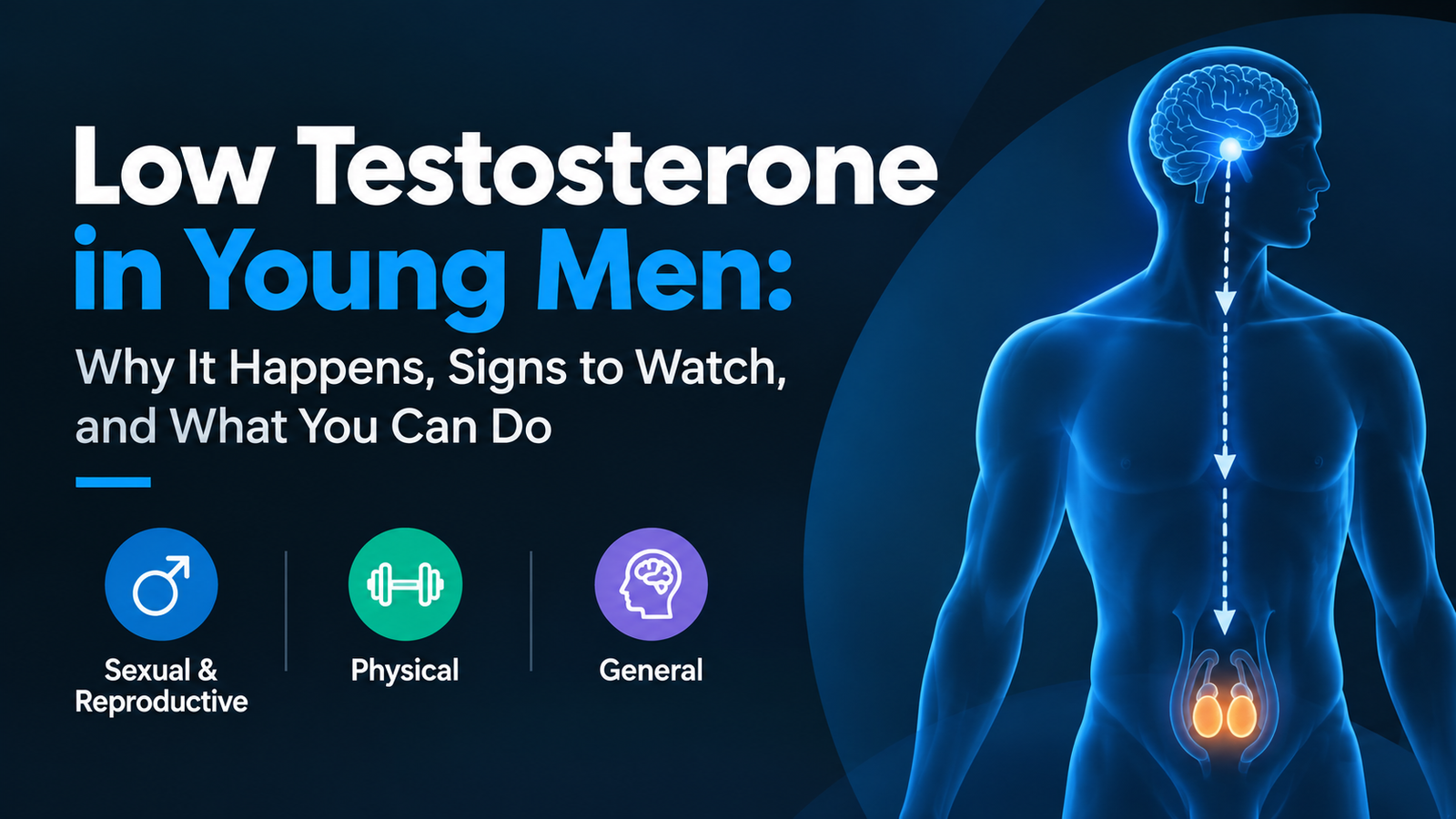
Its production is controlled by the hypothalamic-pituitary-gonadal (HPG) axis—a signaling chain from the brain to the pituitary gland and then the testes. A disruption anywhere along this pathway can lower testosterone.
But symptoms alone don’t confirm Low T. Testosterone naturally fluctuates with time of day, sleep, illness, and other factors, which is why diagnosis generally requires compatible symptoms alongside consistently low blood-test results—not a single low reading.
What Low Testosterone Actually Feels Like
Symptoms generally fall into three buckets:
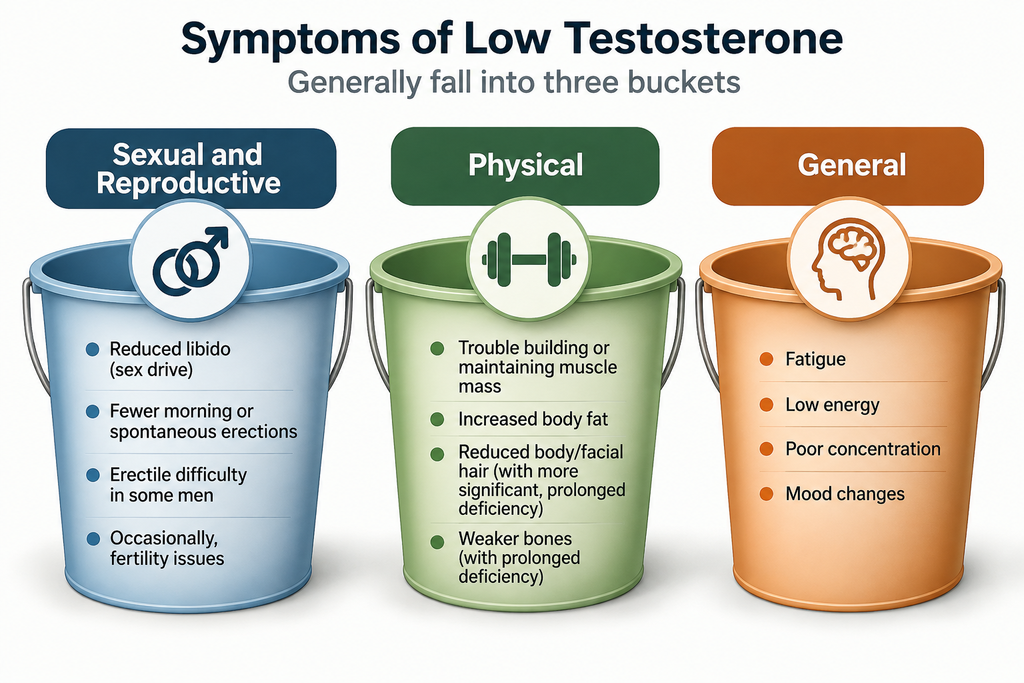
Interestingly, research on younger men suggests that low energy, rather than the classic libido and erectile complaints seen in older men, tends to be the strongest signal something’s off hormonally in this age group. But every one of these symptoms is nonspecific, fatigue can mean anemia or bad sleep, low libido can be psychological, and stalled gains can just mean you’re not eating or recovering enough. Symptoms can raise suspicion. They can’t make a diagnosis.
Why Are Young Men Actually Developing Low Testosterone?
Evidence points to obesity, chronic sleep deprivation, aggressive calorie restriction or rapid weight loss, overtraining without adequate recovery or fuel, undiagnosed sleep apnea, and heavy substance use.
Opioids, for instance, can suppress hormone signaling within hours of use, and studies on anabolic steroid users show significant, sometimes prolonged, drops in natural testosterone production after stopping. Even common over-the-counter painkillers used chronically have been shown to shift hormone ratios in young men.
If Testosterone Really Is Low — Now What?
A common pattern: notice one symptom, a few tired days, a dip at the gym and within hours you’re ordering a “T-boosting” supplement or a specific diet plan, no test, no doctor, just a guess and a purchase. This is backwards, and it can backfire.
Before blaming testosterone, consider the obvious suspects. Bad sleep, overtraining without recovery, or even a mild, unnoticed illness can all mimic low-T symptoms, without your testosterone actually being low.
If symptoms persist for weeks despite ruling out the obvious causes, that’s the signal to get an actual morning blood test, not another bottle of supplements, especially since many “boosters” have little evidence behind them and some carry real risks. Find the cause before you chase the fix.
Leave a Reply