
Picture a guy who hits the gym four times a week, tracks his macros loosely, and considers himself healthy. He also grabs fast food for lunch most days, keeps energy drinks in the fridge, and has a beer or three most nights. Is any of that quietly working against his fertility?
The honest answer: maybe, over time. Male fertility isn’t just about sperm count, it depends on body weight, metabolic health, oxidative stress, inflammation, sleep, alcohol use, smoking, medications, and underlying medical conditions. And diet is one of them.
Foods and Drinks That May Work Against Male Fertility
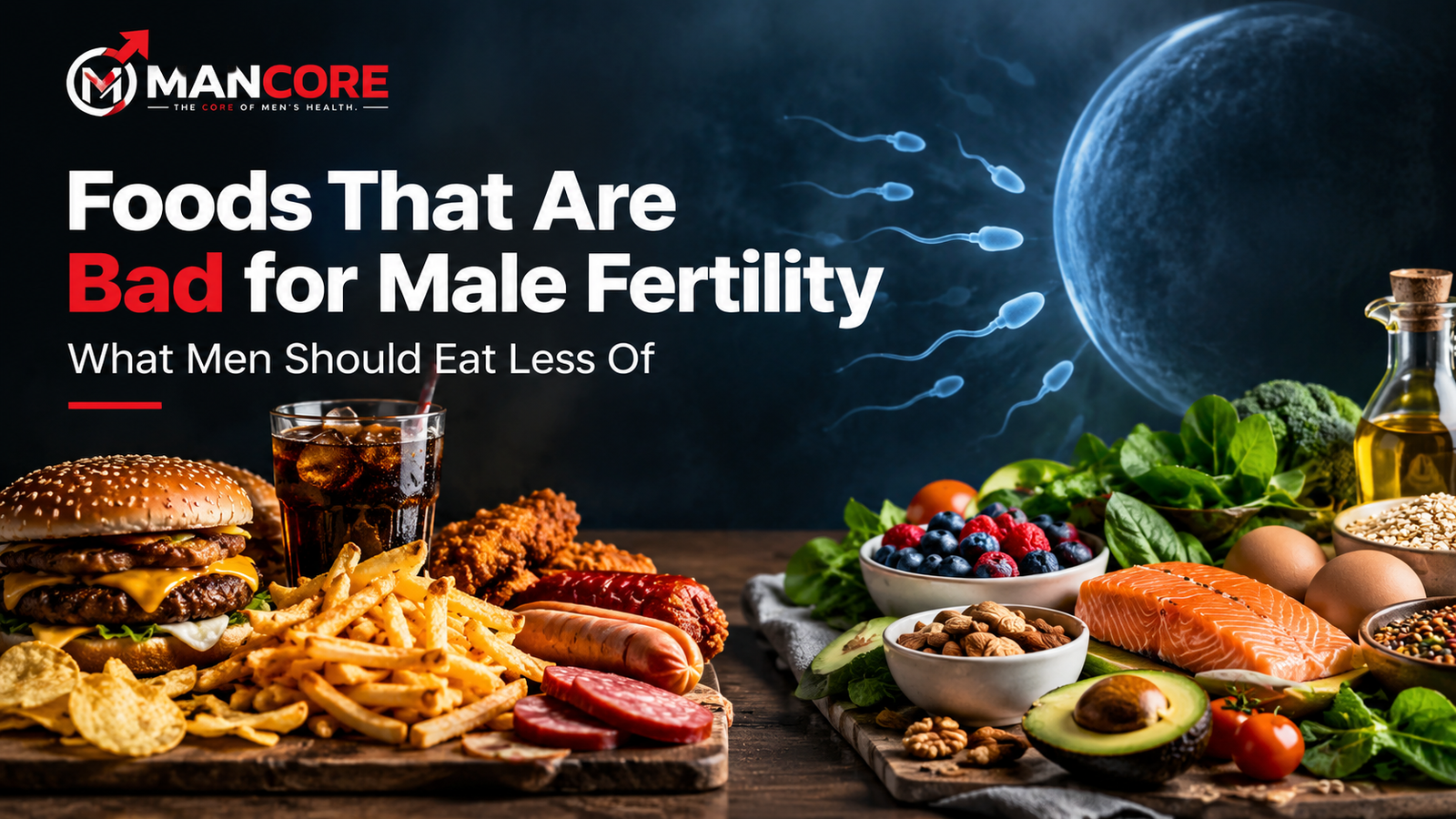
Processed meats. Sausages, bacon, hot dogs and deli meats are common features in fertility studies. A 2017 systematic review of observational studies found that men who consumed more processed meats had lower sperm motility and morphology in several studies, and had lower fertility rates when undergoing fertility treatment. So don’t say, “Hot dogs are bad for my fertility,” it means diets heavy in processed meat, over time, tend to track with worse semen parameters.
Highly processed foods and junk food. Filled with refined carbohydrates and industrial fats, fried foods and packaged snacks add calories. This type of eating has been associated with obesity, insulin resistance, and low-grade inflammation, all of which can disrupt normal hormone signalling in the testes. One review reported that a “Western” diet, which is rich in refined grains, processed meat and sugary foods, is linked to lower levels of markers for testicular function than are more whole-food diets.
High-fat foods that are not good for you. It is the quality of fat that is more important than the quantity. Several studies have linked diets rich in saturated fat and trans fats to reduced sperm count and lower sperm count. In particular, some fried and baked foods contain trans fats and they are consistently associated with a negative effect on semen quality.
Refined sugar and sugary drinks. a heavily processed sweetener extracted from plants like sugarcane or sugar beets, stripped of all natural nutrients to leave pure sucrose. Excessive consumption of it through soda, energy drinks, and highly sweetened foods is always associated with reduced sperm motility and sperm count. Sperm cells use glucose transporters to power up motility.
Excessive alcohol. Long-term heavy drinking has been associated with decreased sperm concentration and mobility, and chronic heavy drinking may lower levels of the hormone signals (LH and FSH) responsible for stimulating the production of testosterone and sperm.
Why Might These Foods Matter for Sperm Health?
Three overlapping mechanisms may explain the link:
- Oxidative stress: Sperm are especially vulnerable to oxidative damage, which can affect their membranes, motility, and DNA integrity.
- Hormones and metabolism: Obesity and insulin resistance can disrupt the signals that drive testosterone and sperm production. The relationship is complex, not a simple “bad food → low testosterone → infertility.”
- Inflammation: Long-term poor eating patterns can cause low-grade inflammation that may also affect reproductive tissue.
What Should Men Eat Instead?
You don’t need a perfect “fertility diet.” What the research consistently favors is a pattern built around:
- Fruits and vegetables
- Whole grains and legumes
- Nuts and seeds
- Fish (lower-mercury varieties)
- Eggs and quality protein
- Healthy unsaturated fats
Zinc, selenium, folate, and vitamin C are nutrient supplements that appear frequently in fertility research, but are not necessarily supplements to be taken in high doses. It’s not the same as megadosing an actual deficiency, and there’s little evidence for the latter.
The Mediterranean diet is the eating style which has been associated with the highest levels of sperm concentration, sperm motility, and sperm count in studies. It is not a rule, but a plausible and supported guideline to follow in designing meals.
Leave a Reply