

A 5-minute read, because great sex isn’t a performance review.
When Did Sex Become a Test?
Did I last long enough? Was I hard enough? Did I satisfy her? Am I big enough? Should I be better at this?
Many men ask themselves these questions quietly often when they are alone or in their private moments. Sex was never entirely about making a baby. It was about pleasure, about feeling close to someone, about connection and about play. Over time modern culture has quietly shifted the way we think about sex. It has turned it into something that can be measured, like a test. People start caring about how it lasts, how strong the erection is, how much stamina someone has, or how big things are.
This is the difference: sex as an experience versus sex as a performance. When sex is an experience the focus is on the moment on what’s happening between two people. The question becomes, “What is happening between us?”. When sex becomes a performance the focus shifts inward. The question turns to “How am I doing?”. When that question takes over something important disappears. The magic, the intimacy, the real connection all gone.
Where Do These Expectations Come From?
You can’t point a finger at just one source. Expectations around sex pile up from all kinds of places: porn, social media, dating apps, ads, movies, random jokes among friends, and maybe most of all, those silent comparisons men make on their own.
Porn is entertainment, not a blueprint for real-life sex. It relies on editing, selected performers, and sometimes techniques or pharmaceuticals that aren’t representative of ordinary sexual experiences. Still, when scripted sex becomes a man’s main reference point, real-life intimacy can easily feel like a performance he is failing to match.
Something subtler is happening too. Streaming, TV, and movies increasingly feature nudity, sexual banter, flirtation, and highly sexualized characters. This isn’t porn or necessarily harmful, but it does make sexual imagery increasingly common. However, information can educate, but, constant exposure can also encourage comparison and unrealistic expectations.
Comparing isn’t just a fantasy, either. In real life, big studies (one in BJU International from 2015) say the average hard penis length is around 13 centimeters, or about 5 inches, way closer to reality than most guys see online. Research about how long sex actually lasts, including Waldinger’s work, reports the median is roughly five to six minutes of penetration. You rarely hear numbers like that online.
When Cultural Expectations Enter the Bedroom
External messages don’t stay external. They become internal rules:
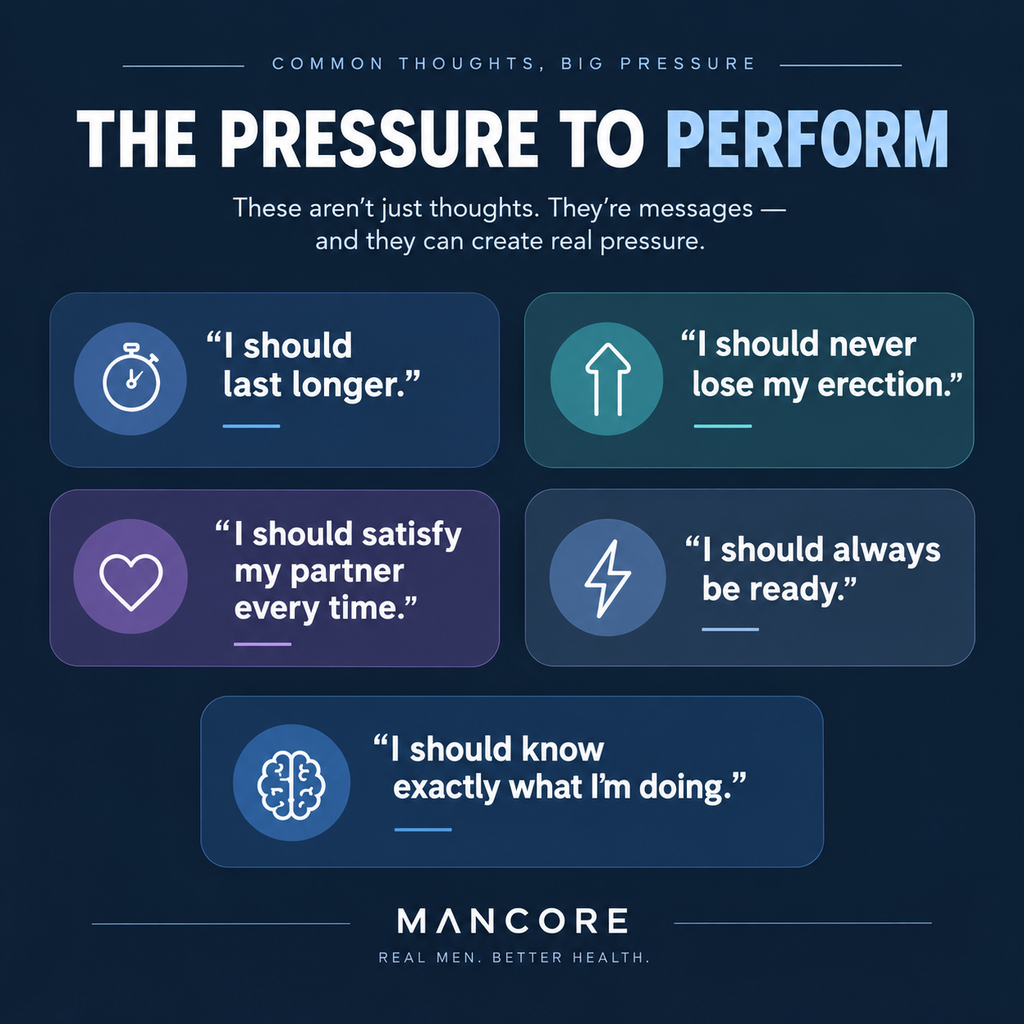
Here’s where sexual performance anxiety really messes with you. Psychologists have known about this for ages. Masters and Johnson gave it a name,“spectatoring.” That’s when you start watching yourself during sex, kind of like you’re outside your own body, judging every move.
Barlow’s model digs deeper: when you’re anxious about how you’re doing, you get so hung up on the performance that you stop paying attention to what actually turns you on. As a result, things can get pretty tough, and that just makes you more anxious. It’s a vicious cycle—watch yourself, get tense, lose focus, struggle, feel even worse.
Anxiety’s just part of the story, not the whole thing, differences are normal. Erections come and go. Libido ebbs and flows. No two sexual experiences are identical. But if these problems stick around or really bother you, don’t go it alone. Talk to your doctor, or see a urologist or sex therapist. They’ll help figure out what’s going on and offer real solutions.
From Pressure to Pleasure: How to Reclaim Intimacy
Moving back toward experience doesn’t require rejecting sex, porn, streaming or modern life. It requires a few shifts in perspective:
- Talk. Honest conversation with a partner about desires, worries and preferences removes guesswork, which is where much anxiety lives.
- Prioritize consent and mutual desire. Sex built on shared interest feels different from sex built on proving something.
- Reset expectations. Understanding what typical bodies, timing and erections actually look like loosens the grip of unrealistic benchmarks.
- Come back to the present. Focusing on sensation, touch and connection rather than self-assessment is the most reliable antidote to spectatoring.
Leave a Reply