⏱️ A 5-minute read that can show you how healthy you really are
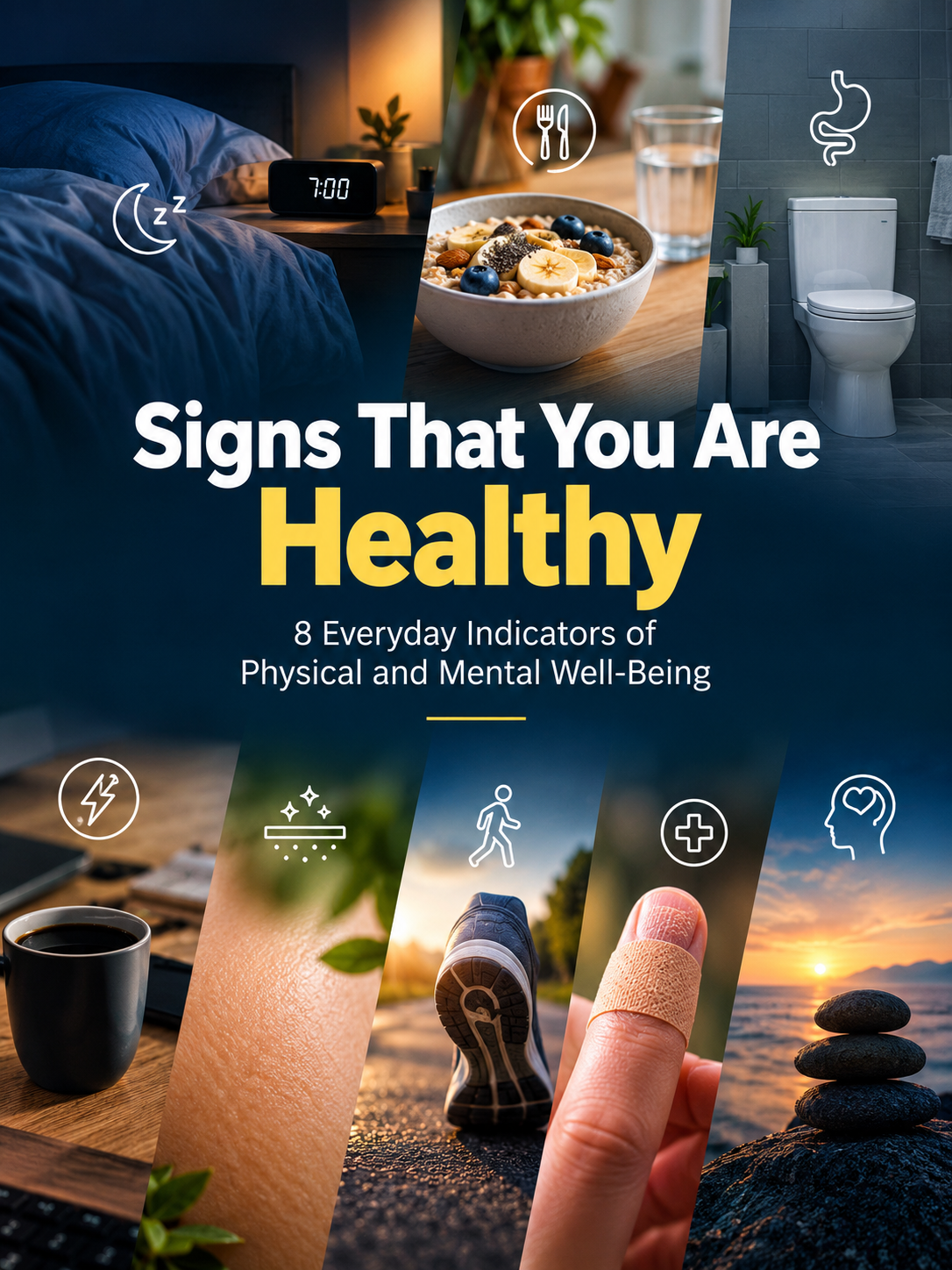
Health doesn’t always announce itself through test results or dramatic changes. More often, it shows up in ordinary moments: how you sleep, how you move, how quickly you recover from a rough day. These signs of good health can offer clues about your physical and mental health.
1You Fall Asleep Relatively Easily and Wake Up Refreshed 😴
Drifting off within roughly 15 to 20 minutes often fits a healthy sleep routine, though this varies and isn’t a diagnostic test. Falling asleep instantly isn’t necessarily better; it can signal sleep deprivation.
Waking up reasonably refreshed, staying alert by day, and keeping a consistent schedule suggest you’re getting enough quality sleep.
2You Naturally Feel Hungry in the Morning 🍳
A steady morning appetite can reflect your eating pattern, overnight fasting, activity level, and normal appetite regulation. If it’s consistent, your routine may be working for you.
But plenty of healthy people aren’t hungry on waking. Late dinners, stress, medications, and sleep all play a part, and appetite alone can’t measure metabolism or digestive health.
3Your Bathroom Routine Is Comfortable and Predictable 🚽
Digestive health isn’t about minutes spent in the bathroom. It’s about comfort, stool consistency, and a pattern that’s regular for you, without excessive straining or long waits.
Frequency varies, and a daily bowel movement isn’t compulsory. Don’t rush, and don’t suppress the urge.
4You Can Start Your Work Without Depending on Caffeine ☕
If you can think clearly before your first coffee, your sleep and daily routine are probably supporting you. Caffeine itself isn’t unhealthy; the FDA says up to about 400 mg a day isn’t generally linked to negative effects in most healthy adults.
The useful line is between enjoying a cup for taste or a modest lift and feeling unable to function without it.
5Your Skin Is Generally Clear and Healthy-Looking ✨
Comfortable, resilient skin can reflect a well-functioning skin barrier and sensible care: gentle cleansing, moisturizer, sun protection, and good nutrition. But genetics, hormones, age, and environment shape how skin looks.
Occasional breakouts or pigmentation don’t mean you’re unhealthy, and flawless skin doesn’t prove the absence of disease.
6You Naturally Walk at a Brisk Pace 🚶
A comfortable, brisk pace can reflect cardiovascular fitness, muscle function, and mobility. Research in older adults has linked faster gait speed with longer survival.
Walking without unusual breathlessness, dizziness, or disproportionate fatigue is a helpful observation. But pace depends on age, height, joints, disability, and environment, so compare yourself with your own past, not other people.
7Your Wounds Heal Normally and Predictably 🩹
Healing relies on inflammation, tissue repair, circulation, immune function, and nutrition working together. Minor cuts that close steadily without worsening redness are reassuring.
Diabetes, poor circulation, smoking, infection, some medications, and nutritional deficiencies can slow healing. Quick healing doesn’t guarantee strong immunity, but slow healing is worth noticing.
8You Can Manage Anger and Recover From Stress 🧠
Mental well-being is a core part of health, not an afterthought. Being emotionally healthy doesn’t mean never feeling angry, anxious, or frustrated. It means you can recognize those feelings, respond in proportion, and recover without regularly harming yourself or others.
That involves pausing before reacting, communicating clearly, and setting boundaries. Suppression isn’t strength. Ongoing stress can affect sleep, concentration, relationships, and physical health.
Health Is a Pattern, Not a Checklist
Health is better understood as a pattern of energy, recovery, digestion, mobility, and emotional balance over time. You can also have a medical condition and feel perfectly well, which is why preventive care matters.
The most reliable foundations are unglamorous: consistent sleep, balanced meals, regular movement, enough water, honest self-awareness, and check-ups when appropriate.
This article is for general information and isn’t a substitute for professional medical advice, diagnosis, or treatment.
Sources
- NHS. Insomnia
- NIDDK. Constipation; NHS. Constipation
- U.S. FDA. Spilling the Beans: How Much Caffeine Is Too Much?
- American Academy of Dermatology. Acne
- Studenski S, et al. Gait speed and survival in older adults. JAMA. 2011. doi:10.1001/jama.2010.1923
- World Health Organization. Physical activity fact sheet
- NHS. Cuts and grazes
- NIMH. I’m So Stressed Out! Fact Sheet
Leave a Reply