
A 6 mins reading that can change the way you think.
Almost every man has quietly asked it at some point: Is my penis small?
You can’t answer that by looking at porn performers, a friend, a locker-room glance, or a forum post. Those are unreliable yardsticks. Clinical measurement is the reliable one.
What Does the Research Say Is Average?
The largest recent analysis is a 2024 systematic review and meta-analysis in Urology Research and Practice. It pooled 33 studies with 36,883 men, and only clinician-measured data counted. Self-reported figures, which run high, were excluded.
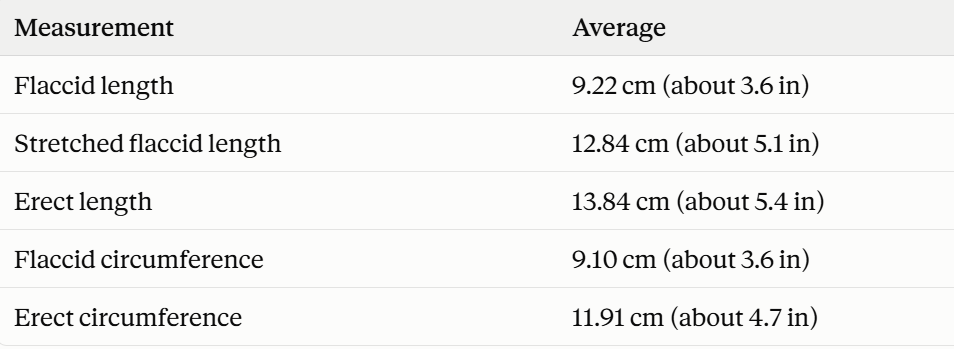
It is important to note that stretched length was measured from the base, pressing the pubic fat pad to the bone, to the tip of the glans. Erect data were rarer. Some studies used medication-induced erections in a clinic, others used self-stimulation in private. The authors also note that measuring techniques vary between studies, and that differences within any region are probably larger than differences between regions.
Below average is not abnormal. Half of all men fall below the mean by definition. Medicine uses the term micropenis for a much rarer situation: a stretched length far below the norm for age. It’s typically identified in childhood and assessed by clinicians. Feeling small, or sitting a little under the average, doesn’t meet that definition.
What about satisfying a partner? A review concludes that penis size is not the primary determinant of sexual pleasure for most women. Arousal, communication, stimulation, emotional connection and comfort matter far more. It also cites a survey of 52,031 people in which 55% of men were unhappy with their size while 85% of women were satisfied with their partner’s.
Penis Size Does Not Equal Fertility
Penis size relates to anatomy. Fertility relates to reproductive function.
Fertility depends on sperm count and concentration, motility, morphology, ejaculation, hormonal function, and the health of the reproductive tract. None of these can be read off a ruler. A larger penis is not a sign of better reproductive health, and a smaller one is not a warning sign.
Is the Problem My Body or My Perception of My Body?
This is the most important question in the article.
Many men who worry are anatomically normal and still distressed. That distress is real, and it deserves respect. It is different from having an anatomical problem.
Clinicians use terms like small penis anxiety or perceived small penis size. When the preoccupation becomes severe and persistent, taking up hours a day and driving repeated checking or avoidance, it can overlap with body dysmorphic disorder (sometimes called penile dysmorphic disorder). Only a qualified professional can make that judgment. This article can’t diagnose you.
Step 1: Establish reality. Have you actually measured correctly, or are you judging by eye? Looking down at your own body distorts perspective, and comparisons make it worse.
Step 2: Compare with clinical data, not other men. If your measurements fall within population ranges, the problem is less your anatomy and more the reference point you’re judging it against.
Step 3: Ask where the belief came from. Common sources include:
- Pornography. Performers are a selected group, not a random sample.
- One unusually large reference point. A single man who was much larger can quietly become your “normal.”
- Selective memory. Anxious men remember the larger men and barely register the similar or smaller ones. Psychologists call this attentional or confirmation bias.
- Locker rooms. Flaccid size varies widely and doesn’t reliably predict erect size.
- Online exaggeration. Anonymous forums and self-reported numbers inflate expectations.
- Masculinity myths. Many cultures wrongly link genital size with dominance, ability or worth.
- Measurement obsession. Repeated measuring, checking and reassurance-seeking tends to feed anxiety rather than settle it.
A normal body can become a source of real distress when your internal standard has become unrealistic.
When Size Anxiety Starts Affecting the Body
Here is the paradox. Worrying about sexual inadequacy can begin to interfere with sexual performance. The cycle often runs like this:
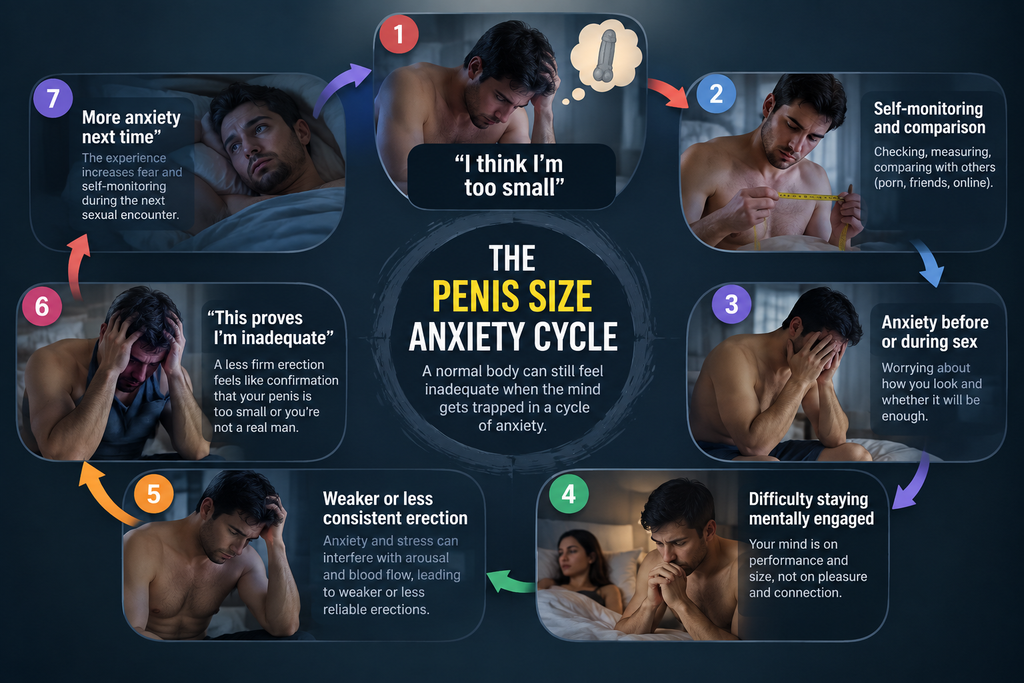
Anxiety activates the sympathetic “stress” response, which can interfere with arousal and make it harder to get or maintain an erection. Constantly monitoring your body and performance during sex is sometimes called “spectatoring.”
Stress, incomplete arousal, and even cold temperatures can also make the penis temporarily appear smaller. This is not permanent shrinkage.
Size anxiety can lead to avoiding intimacy, fear of being seen naked, constant comparison, reassurance-seeking, and loss of sexual confidence. In some men, this anxiety may contribute to psychogenic erectile dysfunction. A man with completely normal anatomy can become so worried about his sexual ability that the anxiety itself begins interfering with the function he was afraid of losing.
The Comparison Mistake I Made
Growing up, I crossed a privacy boundary I now understand existed for a reason. Like some teenage boys, I ended up in situations where we compared or glimpsed each other’s bodies. Some boys were smaller than me. Some were similar. Some were larger.
Afterwards, I barely remembered the smaller ones. The larger ones stayed with me, and over time they shaped how I saw my own body.
The lesson isn’t to feel ashamed of the human body—it’s to stop using someone else’s anatomy as a measuring stick for your own. Whether in a locker room or elsewhere, his body reflects his genetics, and yours reflects yours. Neither needs to match. Besides, flaccid size is a poor basis for comparison because the change from flaccid to erect varies considerably between men.
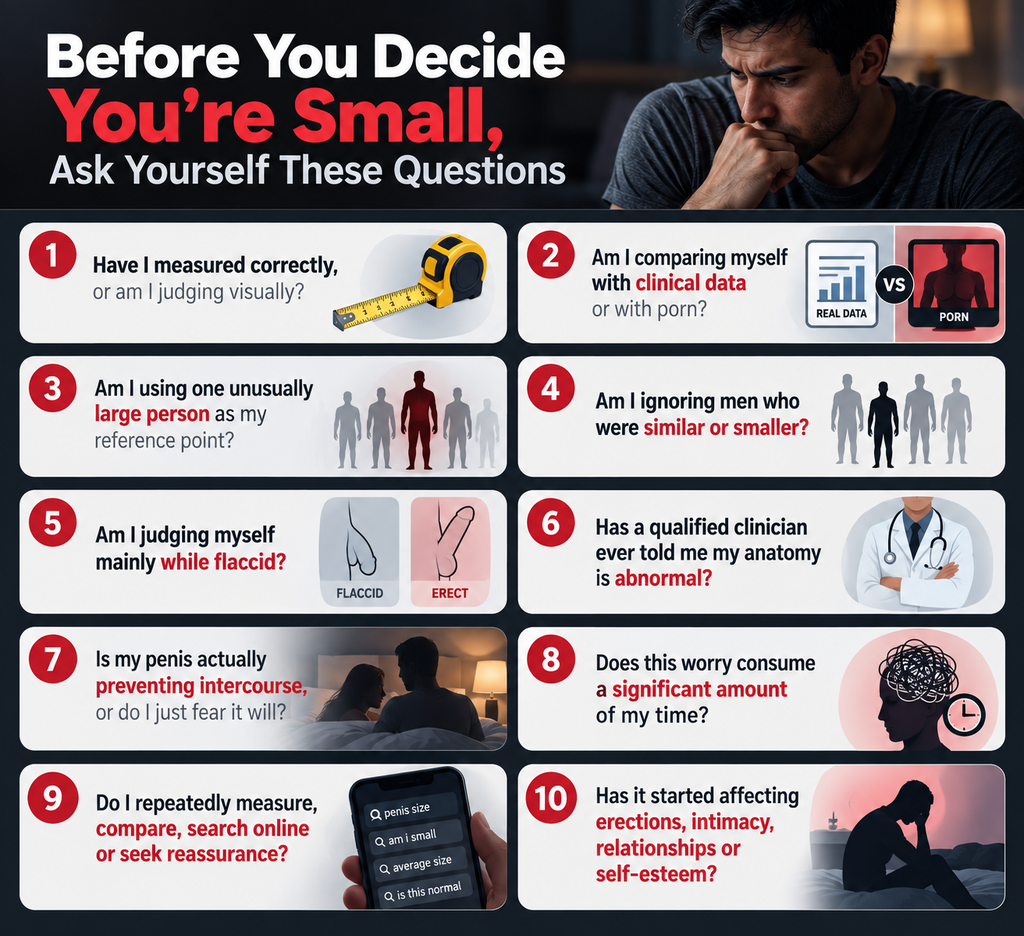
Before You Decide You’re Small, Ask Yourself
What NOT to Do Because You Think You’re Small
Size anxiety can make men easy targets for products promising a quick fix. Enlargement pills, oils, supplements, stretching techniques, unsafe devices, injections, and questionable cosmetic procedures are often poorly supported by evidence and can sometimes cause harm.
Remember, being average doesn’t mean being inadequate, and being below average doesn’t automatically mean something is medically wrong. Penis size does not determine fertility, masculinity, personal worth, or by itself determine a partner’s sexual satisfaction.
For some men, the fear of being inadequate eventually causes more trouble than their anatomy ever did. Constant comparison, self-monitoring, and lost confidence can interfere with the very sexual experience they were worried about.
If this insecurity is taking over your thoughts or affecting your sex life, speaking with a doctor, urologist, or qualified sexual-health professional is a much better investment than chasing enlargement products.
Leave a Reply