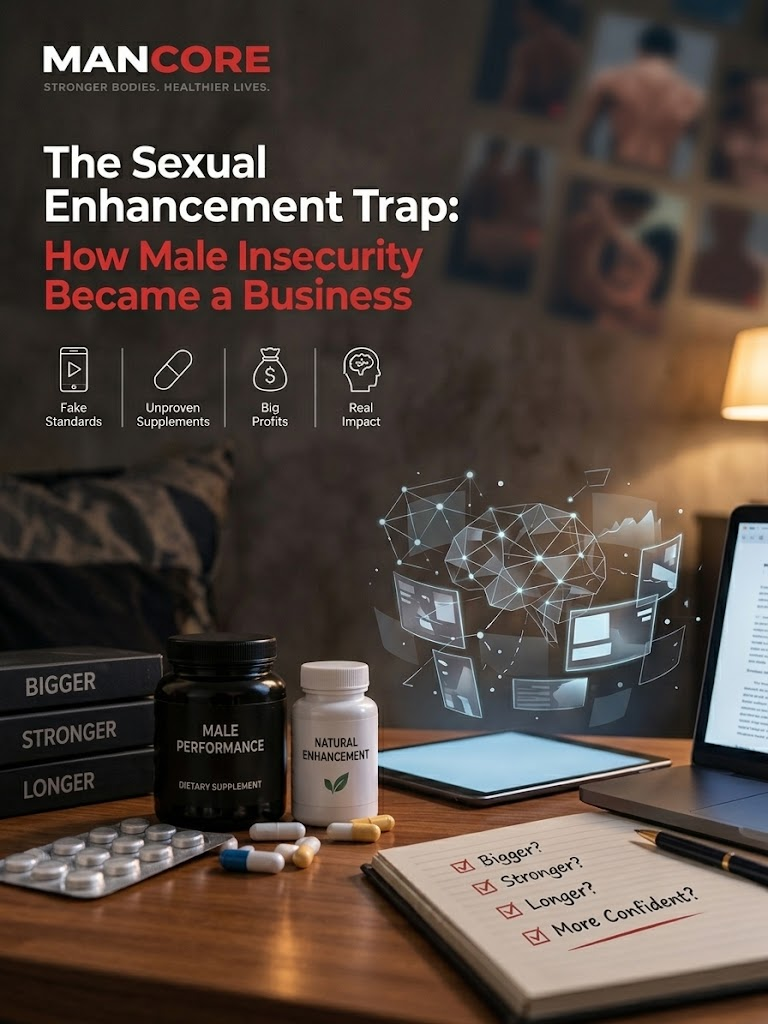
How the daily scroll teaches men to doubt themselves, and who profits from that doubt.
The worry nobody sees
Many healthy men now carry a worry that nobody else knows about. They sleep, study, work and laugh with friends. From the outside, nothing is wrong. Inside, a thought keeps them occupied:
Nothing about their bodies has changed. No doctor has raised a concern. The worry comes from a comparison, and what they are comparing themselves with is not real.
This sense of inadequacy can push many men into a deep-seated inferiority complex, making them vulnerable to unnecessary supplements and medications that may pose long-term risks to their health.
This article explores how the daily scroll through sexualised digital content is reshaping how men see themselves, and how that doubt is pushing them toward fake medicines and unproven supplements.
The origins of male insecurity
Young men now meet sexualised content far more often than they search for it. It appears between ordinary videos, often without warning.
Streaming platforms offer polished intimacy scenes where bodies and performance are idealised and edited. Reels and short videos mix provocative clips and sexualised jokes into everyday scrolling. Few of those videos add the message that real men are big, hard and tireless.
None of this reflects normal life. It is cast, lit, edited and cut to hold attention. Rare traits start to look ordinary, and ordinary bodies start to look like failures.
Repeated exposure can quietly shift a man’s understanding of what is normal. They can begin to feel like a standard against which reality is measured. The problem is not simply what he sees, but what he starts believing about himself because of it.
When insecurity becomes business
A complex rarely develops overnight. It grows through comparison, constant checking, and misinterpretation. A softer erection during a stressful week or finishing quickly once may be mistaken for proof of inadequacy.
Instead of easing their fears, late-night searches can expose men to more comparison. Research has linked problematic pornography use with negative body image, though the direction of this relationship remains unclear. This can create a cycle of worry, searching, and greater insecurity.
Eventually, the complex becomes more than a concern about appearance or performance. It becomes a belief:
The shortcuts sold to fix a problem that isn’t there
A man who feels inadequate may pay to feel adequate. Sellers know it. Three things are commonly targeted:
Stronger erections that were already normal
Men with healthy function are told they need more. Occasional changes are not a disease.
A bigger penis that is already naturally normal
The body is sold as a defect. Credible evidence for most enlargement pills, oils and herbs is lacking. Be sceptical of any claim of permanent enlargement.
Longer timing
Ejaculation timing varies from man to man and night to night. A lasting concern should be assessed in context, not treated with unnecessary herbs and pills.
The risks go beyond wasted money. These solutions might contain drugs that can dangerously lower blood pressure when combined with nitrate medicines.
When one product fails, insecurity may push a man toward the next.
When self-doubt takes over
If the cycle continues, the damage can move beyond the body. A man may become preoccupied with himself, avoid dating, withdraw from friends and seek constant reassurance. Confidence drops. Anxiety and low mood can follow.
Suddenly the same man ends up using antidepressants. But it is worth knowing that antidepressants can cause erectile dysfunction, low libido and delayed or absent orgasm.
Stop to break this harmful cycle
- Protect your feed. Mute, unfollow and limit content that triggers comparison.
- Stop the checking. Repeated measuring and searching keep the worry alive.
- Be sceptical of promises. Doubt permanent enlargement, guaranteed erections and “unlimited stamina.”
- Avoid unknown mixtures. Never take unverified herbs, self-prescribed sexual medicines, or combinations with other medication.
- Talk. A trusted friend, partner or counsellor makes the worry smaller.
This article is for education only and is not a substitute for personal medical advice. If you take prescribed medication, including antidepressants, do not stop or change it without speaking to your doctor.
Leave a Reply