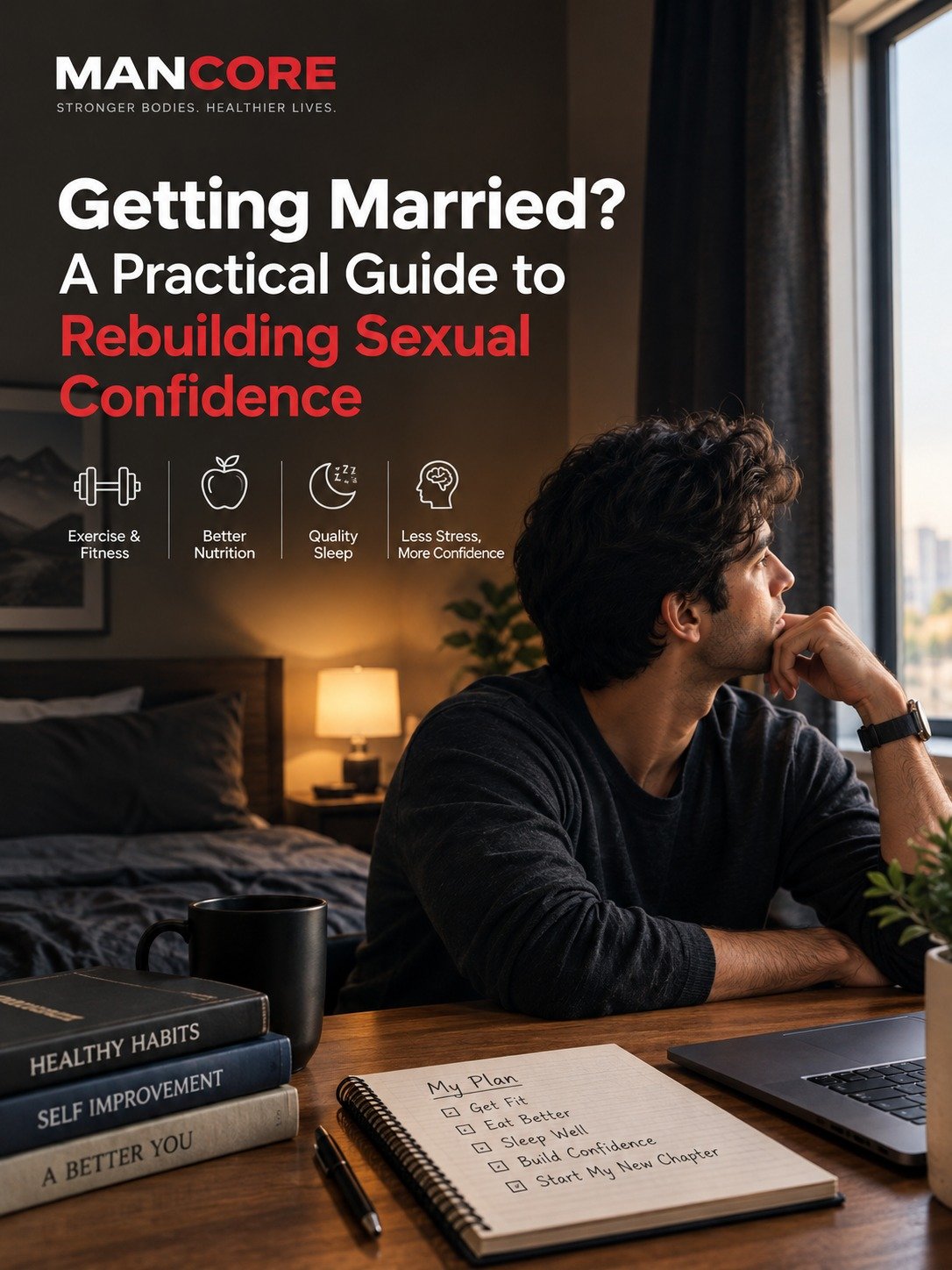
Replace panic with facts, and build a realistic plan for married life.
The Wedding Is Approaching. Why Are So Many Men Suddenly Worried?
Picture a man three months from his wedding. He is excited, but late at night his mind drifts to a harder question: will I be able to perform? Soon he is searching for abstinence plans, supplements, and ways to last longer.
If you are getting married and worried about sexual performance, you are far from alone. Films, pornography, and online forums set standards that real people do not meet. Add the fear of disappointing someone you love, and a happy milestone can become a source of stress.
Here is the central idea of this guide: preparing for married life is not about repairing a damaged body overnight. It is about understanding your worries, improving your health, and building a calmer, more realistic relationship with sex.
Did Masturbation Damage Your Sexual Health?
Masturbation is not generally considered a cause of permanent erectile dysfunction, infertility, or physical weakness. Frequent or rough stimulation can cause temporary soreness or irritation. Some men also get used to one particular type of stimulation, which can feel hard to reproduce with a partner.
The question of masturbation and erectile dysfunction comes up constantly, but ED and premature ejaculation usually have several contributing factors. These include performance anxiety, stress, relationship concerns, medication effects, and underlying medical conditions. Neither should automatically be blamed on masturbation.
Occasional difficulties are also different from persistent problems. Nervousness during early sexual experiences does not mean you have a disorder.
Should you stop masturbating before the wedding? That is a personal choice. A break can make sense if the habit feels compulsive, causes irritation, or feeds your anxiety. But no specific number of days has been shown to restore sexual function, and abstinence is not a cure for ED or premature ejaculation.
Sexual confidence is also separate from fertility. Stamina, ejaculation volume, and energy levels cannot reliably tell you anything about sperm production. If you have fertility concerns, a semen analysis is the proper test.
Build a Stronger Foundation: Exercise, Heart Health, and Pelvic-Floor Training
Erections depend on healthy blood vessels, nerves, hormones, and a calm mind. That is why exercises for sexual health begin with general fitness. None of these habits is a guaranteed fix, but each supports the systems involved.
Cardiovascular exercise
Work gradually toward about 150 minutes of moderate aerobic activity per week, adjusted to your fitness and health. Brisk walking, jogging, cycling, and swimming all count. Healthy circulation supports erectile function, but exercise is not a guaranteed cure for ED.
Resistance training
Aim for two or more strength sessions per week that cover the major muscle groups. Lifting supports strength, body composition, metabolic health, and self-confidence. It will not automatically raise testosterone or transform sexual performance.
Pelvic-floor exercises
Kegels train the muscles that support the bladder and bowel and play a role in sexual function. To find them, notice the muscles you would tighten to hold back gas, or to briefly interrupt urine flow. Use the urine test only to identify the muscles, never as your regular exercise, because repeatedly stopping midstream can cause problems.
Pelvic-floor work is not a guaranteed treatment for premature ejaculation or ED. If you have pelvic pain, a constantly tight feeling, or symptoms that worsen, see a professional instead of doing more Kegels.
Eat for General Health, Protect Your Sleep, and Manage Stress
Think of these as a sustainable routine, not a set of tricks for improving erections naturally.
Nutrition
Choose a balanced, Mediterranean-style pattern using foods available where you live: eggs, fish, lean meat, lentils, beans, nuts, seeds, vegetables, fruit, whole grains, and plenty of water. This supports heart health and normal reproductive function, though no single food guarantees better erections, testosterone, or fertility.
Avoid smoking, recreational drugs, heavy drinking, crash diets, and unregulated “performance” supplements. If you suspect a nutritional deficiency, get tested rather than taking high-dose supplements on a guess.
Sleep
Most adults do best with 7 to 9 hours of regular sleep. Good sleep supports energy, mood, recovery, and hormonal health.
Stress
Regular exercise, manageable routines, and relaxation all help. So does cutting back on sexual content that creates unrealistic expectations or compulsive habits. Constantly checking your erections, testing your performance, or seeking reassurance tends to make anxiety worse, not better.
The goal is a healthy body and a calmer mind, not instant sexual perfection.
Prepare for Intimacy, Not a Performance Test
Married life does not require exceptional stamina or a perfect erection every time. Early experiences can involve nerves, awkward moments, variable erections, or finishing sooner than expected. One experience is not a diagnosis.
Be patient, talk openly, and keep your expectations realistic. Intimacy is not a competition, and both of you will need time to feel comfortable.
See a qualified doctor or urologist if you have recurring erection difficulties, distressing premature ejaculation, markedly low desire, genital pain, or fertility concerns. Sexual-health counselling can help when anxiety or relationship worries play a large part.
Do not self-prescribe ED pills, testosterone, numbing sprays, or unregulated supplements before the wedding. Medical treatment can help when properly chosen, but it should not be used to cover up normal nerves.
Build Your Pre-Wedding Plan
How far away is your wedding? Pick one to see a practical plan built from the habits above.
Want a Plan Built Around Your Situation?
Every man’s timeline, health, and worries are different. Tell us a little about yours and we will get back to you with a more personal guide.
Please do not send medical records or highly personal details in your first message. We provide educational guidance, not diagnosis or emergency care. If you have pain or sudden symptoms, see a doctor in person.
References
- Burnett AL, et al. Erectile Dysfunction: AUA Guideline. Journal of Urology, 2018. auanet.org
- European Association of Urology. Guidelines on Sexual and Reproductive Health. uroweb.org
- World Health Organization. Guidelines on Physical Activity and Sedentary Behaviour, 2020. who.int
- Hirshkowitz M, et al. National Sleep Foundation’s sleep time duration recommendations. Sleep Health, 2015. doi:10.1016/j.sleh.2014.12.010
- Mayo Clinic. Kegel exercises: A how-to guide. mayoclinic.org
This article is for education only and is not a substitute for personal medical advice. Please verify reference links before publishing.
Leave a Reply