
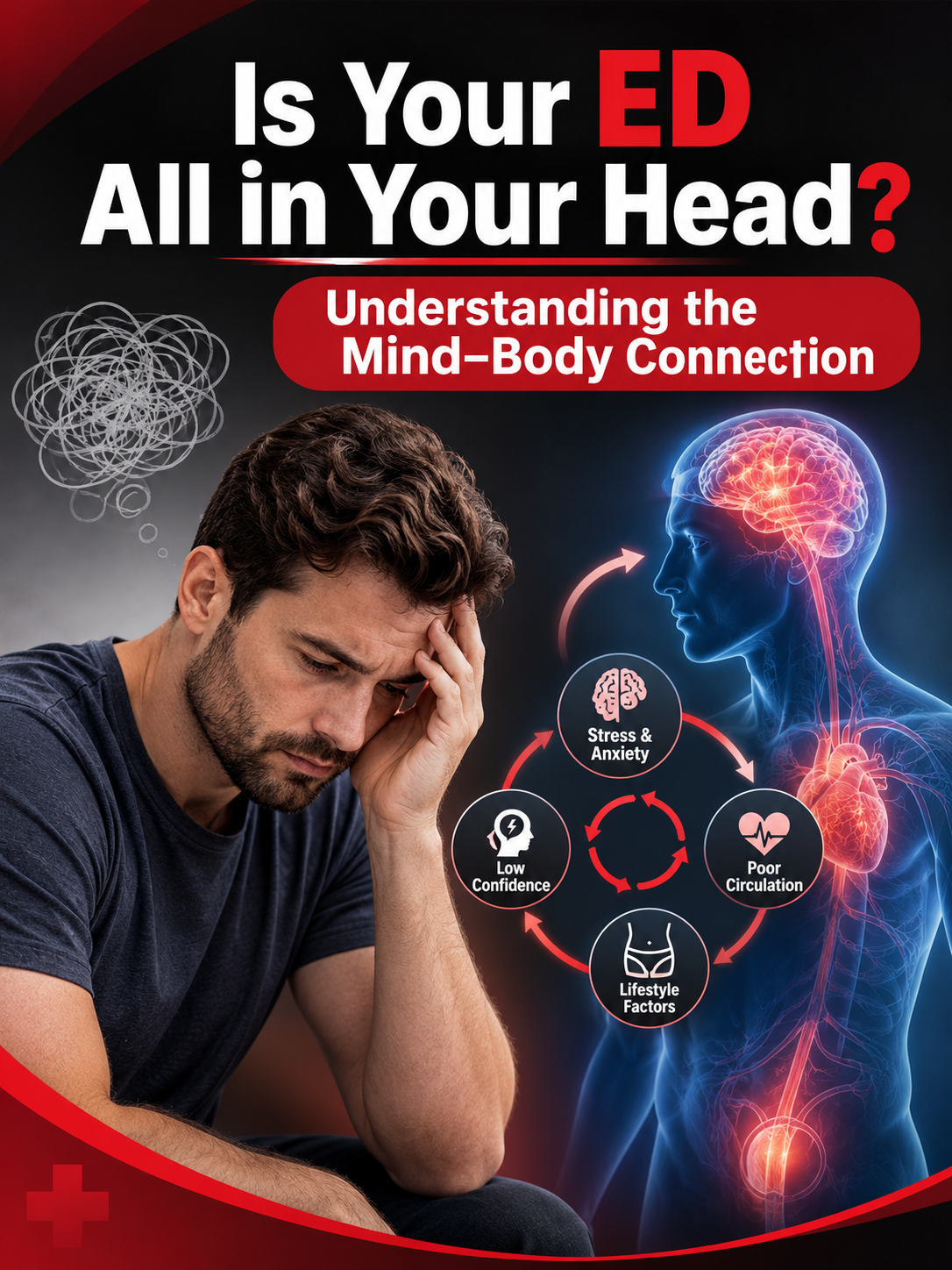
Understanding the Mind–Body Connection
Erectile difficulties are not always just physical or psychological. Discover how your mind, nervous system, blood circulation and everyday habits interact to influence your sexual health.
Imagine preparing for an intimate moment with your partner, only to find that your erection starts fading despite feeling sexually interested. Naturally, your first thought might be that something is physically wrong. You might start looking for supplements, medications or ways to improve blood circulation.
But what if there is another part of the puzzle you have overlooked? The relationship between your mind and body plays an important role in sexual function. Stress, anxiety and physical health can influence one another, sometimes creating a cycle that makes erection difficulties even harder to overcome.
1. How Does an Erection Actually Work?
An erection might seem like a simple physical response, but it involves several systems working together. Three important components are blood flow, sexual stimulation and nervous system signals.
Blood Flow
Blood must enter the erectile tissue through the penile arteries. Adequate circulation helps create firmness.
Sexual Stimulation
Physical and psychological stimulation contribute to sexual arousal and initiate the erection response.
Nervous System
The brain and nervous system coordinate signals that help blood vessels relax and allow blood to enter penile tissue.
As the erectile tissue fills with blood, expanding tissue compresses the veins that normally drain blood away. This helps maintain the erection. If any part of this coordinated process is disrupted, achieving or maintaining an erection may become difficult.
2. The Mental Side: When Your Mind Interferes With Your Erection
Have you ever found yourself thinking about whether you will be able to maintain an erection even before intimacy begins? Perhaps you remember a previous experience when things did not go as expected. Now, instead of enjoying the moment, you are constantly monitoring your performance.
This is where psychological factors can become important. Your thoughts and emotional state can influence the physiological processes involved in sexual arousal.
Performance Anxiety
- Fear of losing an erection.
- Worrying about satisfying your partner.
- Constantly monitoring sexual performance.
- Expecting another unsuccessful experience.
Stress & Overthinking
- Work and financial pressures.
- Chronic psychological stress.
- Negative thoughts during intimacy.
- Difficulty relaxing and focusing on arousal.
When you experience stress, your body activates its sympathetic nervous system, which is associated with the fight-or-flight response. This can interfere with the relaxation and blood vessel changes needed for an erection.
In other words, worrying excessively about your erection can sometimes make it more difficult to achieve one.
3. The Physical Side: When Your Body Makes Erections Difficult
While psychological factors matter, it is equally important not to overlook physical health. Erections depend heavily on healthy blood vessels, nerves and the body’s ability to regulate blood circulation.
Several lifestyle and metabolic factors can gradually affect these systems.
Excess Body Fat
Particularly around the abdomen, excess body fat is associated with metabolic problems and increased cardiovascular risk.
Elevated Blood Sugar
Insulin resistance and diabetes can damage blood vessels and nerves involved in erectile function.
Poor Dietary Habits
Unhealthy dietary patterns can contribute to metabolic problems and poorer cardiovascular health.
Inflammation
Chronic inflammation and associated vascular dysfunction can impair the health of blood vessels.
Reduced Circulation
Impaired blood vessel function can make it harder to deliver sufficient blood to erectile tissue.
Other Medical Factors
Hormonal conditions, neurological problems and certain medications can also contribute to ED.
When circulation is compromised, an erection may be difficult to achieve or maintain. This is one reason why persistent ED should never automatically be dismissed as a psychological issue.
4. The Mind–Body Vicious Cycle: How One Problem Creates Another
This is perhaps the most important connection to understand. Psychological and physical contributors to ED do not always operate independently. Sometimes, one problem triggers another, creating a cycle that gradually reinforces itself.
The Mind–Body Feedback Loop
Consider a man who initially experiences erection difficulties because of poor vascular health. After several unsuccessful experiences, he begins worrying about his performance. Even when the original physical problem has not worsened, anxiety may now add another obstacle to sexual arousal.
The reverse can happen too. A man experiencing performance anxiety may repeatedly struggle with erections, gradually losing confidence and developing even greater anxiety around intimacy.
5. Five Lifestyle Factors That Influence Your Mind and Body
Before assuming that your problem has a single cause, take an honest look at your everyday habits. Several lifestyle factors can influence both psychological well-being and physical health.
Sleep Quality Are you consistently getting enough quality sleep? Poor sleep can affect mood, energy and hormonal regulation.
Body Fat & Waistline Are you carrying excess abdominal fat? Consider your metabolic and cardiovascular health.
Stress Management Are you constantly overwhelmed by work, personal responsibilities or negative thoughts?
Physical Activity Do you exercise regularly, or is most of your day spent sitting with very little movement?
Diet & Drinking Habits Are your eating and drinking habits supporting your long-term cardiovascular and metabolic health?
These factors are interconnected. Poor sleep may increase stress, inactivity may contribute to weight gain, and unhealthy dietary habits may affect blood sugar and cardiovascular health. Improving one area can sometimes support improvements in others.
6. What Should You Do If You’re Experiencing ED?
Understanding the mind–body connection is only the first step. The next is identifying which factors may be contributing to your situation and taking appropriate action.
-
Start with a medical evaluation.
Discuss persistent erection difficulties with a qualified healthcare professional. A proper assessment can help identify underlying physical or medical conditions. -
Discuss appropriate tests.
Depending on your symptoms and medical history, your doctor may recommend blood sugar testing, cardiovascular risk assessment, hormonal evaluation or other investigations. -
Improve your everyday habits.
Work towards consistent sleep, regular exercise, healthier eating habits and a healthy body composition. -
Address psychological contributors.
If performance anxiety, stress or relationship difficulties are involved, counselling or sex therapy may be helpful. -
Be patient and monitor progress.
Focus on sustainable improvements rather than expecting an immediate solution from a single supplement or lifestyle change.
Your Mind and Body Are Not Working Against Each Other
ED does not automatically mean something is permanently wrong with your body. Equally, it should never be dismissed as something that exists only in your head.
Your physical health, psychological well-being and sexual function are interconnected. Understanding this relationship can help you move beyond guesswork and towards the right evaluation and treatment.
Sometimes, improving your erections starts with looking beyond the bedroom. Because understanding what is happening inside your mind can be just as important as understanding what is happening inside your body.
Leave a Reply