
He was 23, in shape and not ready to spend a day sitting in a doctor’s waiting room.
The pain started suddenly: sharp, annoying, coming and going like it had no reason. He thought maybe he strained something at the gym or twisted his body wrong while sleeping. So he did what a lot of men do: he jumped online looked up symptoms grabbed some pills from home and told himself it would go away on its own. Sometimes it got better. Sometimes it didn’t. He kept waiting.
Then weeks passed. The pain didn’t fade. It grew worse. It became hard to ignore. By the time he finally saw a urologist the damage was already too severe. The testicle could not be saved. Surgeons had to remove it.
Testicular pain is not something you should try to manage. You shouldn’t wait it out. It’s not always harmless. So what causes it? When does it turn into an emergency? These are the questions that will be covered in this reading.
What Happens If You Lose a Testicle?
Your testicles do two jobs: they make testosterone, your main male hormone and they make sperm.
Here’s the reassuring part. Losing one testicle does not automatically mean infertility or low testosterone. A healthy remaining testicle can often pick up the slack. The outcome does depend on how healthy the other testicle is and why the first one was lost.
If testosterone drops low it can mean a weaker sex drive, less energy, difficulty keeping muscle, mood changes and sexual problems.
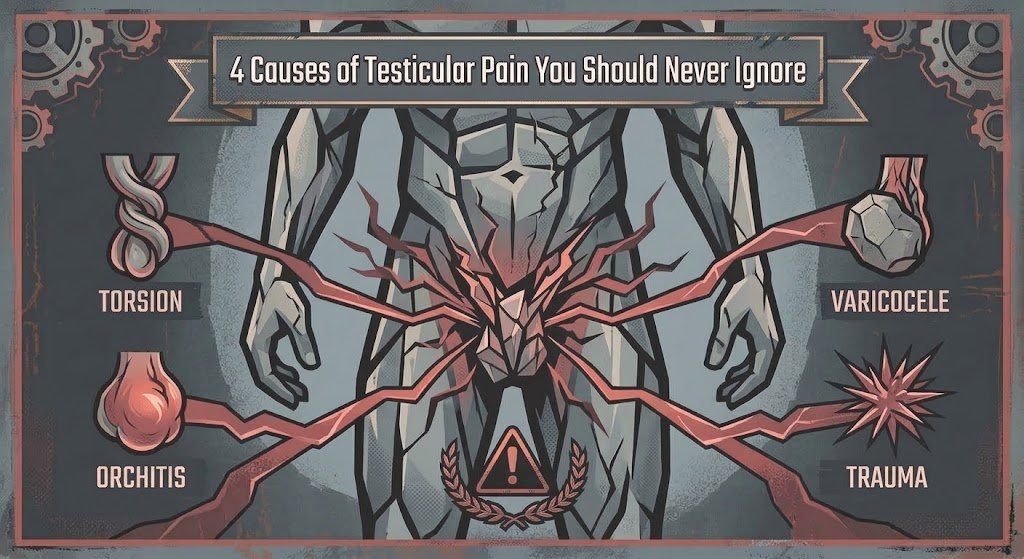
However, it is important to know why testicular pain happens in the first place. Below we break down the four causes of testicular pain so you know what to watch for and when to get help.
1. Varicocele: The Slow, Dragging Ache
A varicocele is a swelling of the veins inside the scrotum like varicose veins in the legs. It is fairly common in younger men and usually grows over time.
Of sudden sharp pain it feels like a dull ache, a heavy feeling or a dragging sensation. It often gets worse after standing for a time after tough exercise or at the end of the day.
In some men they can affect how sperm is made and in teenagers they can change how the testicle grows. That is why a lasting ache, swelling, a change in the way your scrotum looks, a new lump, or trouble having a baby should all be checked.
2. Testicular Infection: When Germs Cause Swelling and Pain
Infections can make the testicle hurt, get bigger, and feel sore. Doctors use the word orchitis to describe when the testicle becomes inflamed. There are two ways this can happen:
1. Viral infection
The common cause is mumps. In some men mumps leads to the testicle swelling and hurting which can damage the part of the body that makes sperm.
2. Bacterial infection
Bacteria can move through the reproductive system and cause an infection in the tube behind the testicle (called the epididymis), and sometimes the testicle itself. In men who are sexually active, common sexually transmitted infections like chlamydia and gonorrhea often cause this problem.
Some sexual activities can increase the chance of being exposed to bacteria and STIs. Those infections can then spread through the urinary or reproductive system. It’s not a path to the testicles but the risk is still there.
The good news is that this is very easy to prevent and fix:
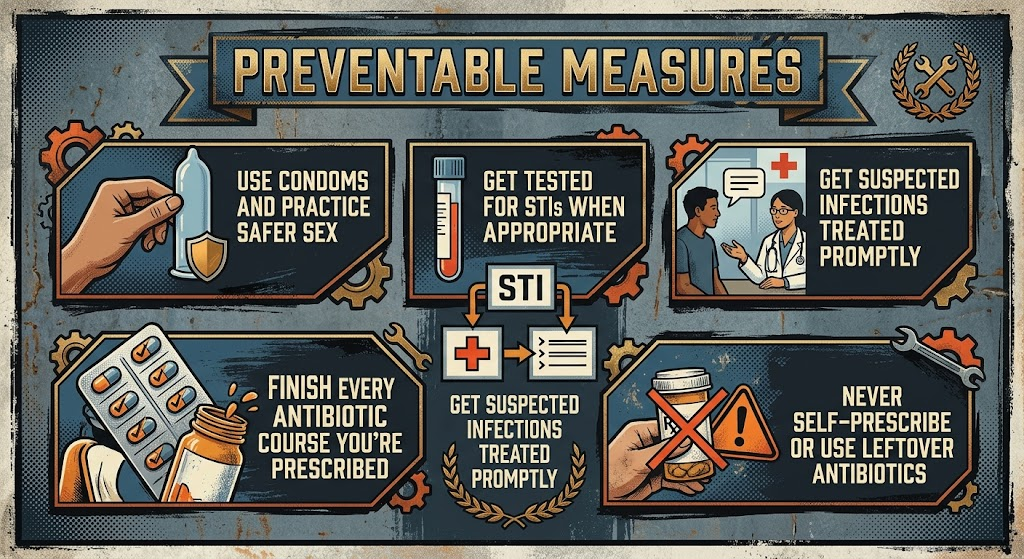
Most infections get better with the right treatment. Losing a testicle because of an infection is very rare. Usually happens when an infection is very bad has complications or is ignored for too long.
3. Testicular Torsion: The Emergency Where Hours Matter
Testicular torsion occurs when a testicle turns inside the scrotum and tightens the cord that brings blood to the testicle.
When blood stops the testicle begins to suffer harm. Testicular torsion usually brings:
- intense pain in the testicle or scrotum.
- Fast swelling.
- Nausea or vomiting.
- A testicle that looks higher or sits higher than usual.
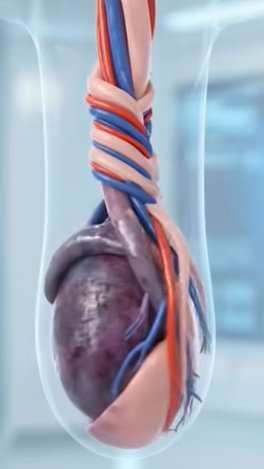
Testicular torsion is most common in teens and young men but it can happen to anyone of any age. It can happen while sleeping, after exercise, or after a light bump.
4. Testicular Trauma: Injuries That Look Minor but Aren’t
Your testicles are located outside the body. Have very little protection from muscles or bones. This makes them very easy to hurt. Common reasons for injury include getting hit in the groin by a cricket ball, while riding a motorcycle, falling hard onto a bike frame, or getting a hit during workout.
A stronger hit can lead to bleeding inside the scrotum heavy bruising or even a tear in the testicle.
Get checked if, after an injury, you have pain that lingers or worsens, large swelling, bruising, nausea or vomiting, blood in your urine, a change in the testicle’s shape or position, or trouble walking because of the pain.
Pain Is a Warning, Not a Diagnosis
Testicular pain has many possible causes. Some can be monitored calmly. Others are genuine emergencies. You can’t tell which is which by how it feels, and you shouldn’t try to guess.
So here’s the rule: sudden, severe, unexplained, persistent, or worsening testicular pain deserves medical attention. Don’t rely on painkillers, internet searches, or home remedies to figure out what’s going on.
Testicular pain is a symptom, not a diagnosis, and sometimes waiting is the most dangerous choice.
Your testicles are not something to gamble with. When the pain is sudden, severe, or unusual, getting checked early is not overreacting. It’s protecting your health.
Medical disclaimer: This article is for educational purposes only and does not replace evaluation by a qualified healthcare professional. If you have testicular pain, seek medical care.
Leave a Reply