
Imagine this: on its own, with a screen, everything is just right! However, when a true partner is in the mix, the body just doesn’t cooperate. There’s no more confusing experience for a man than this — and it’s seen more and more in the younger crowd who have access to unlimited, high-speed porn at their fingertips.
The pattern is familiar for many young men: firm erections during pornography and masturbation, but difficulty achieving or maintaining one during partnered sex. This challenges the common perception of erectile dysfunction as primarily an older man’s problem linked to physical disease. A study published in Dignity: A Journal of Analysis of Exploitation and Violence interviewed men aged 16–52 who reported similar experiences, with many describing early exposure to pornography, frequent use, and a perceived connection between their viewing habits and later sexual difficulties.
What Is Erectile Dysfunction?
If you experience occasional erection difficulty, from stress, fatigue, alcohol, or simply an off night, well that is entirely normal and not a cause for concern. Erectile dysfunction (ED) is generally defined as the persistent inability to achieve or maintain an erection firm enough for satisfactory sexual activity. The key word is persistent.
So anything occasional is not a matter to be worried about. But, once the term persistence arises, one might care to look for assistance. Don’t worry we have got you. The causes are typically grouped into a few categories:
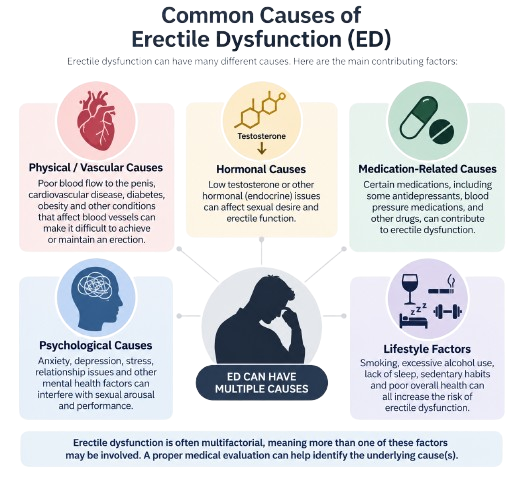
Because physical and vascular causes are less common in younger men, researchers have increasingly looked at psychological and behavioral factors, including pornography use, acting as a major contributor to ED. To read more on ED check the reading on: Why Are More Younger Men Experiencing Erectile Dysfunction?
What Do People Mean by “Porn-Induced ED”?
PIED is a condition where a man can get an erection and orgasm from pornography and masturbation but cannot come up to the same level with a real partner without having any vascular or hormonal issues. In its conceptual aspect, it is different from classic organic ED, which is caused by a blood flow or nerve damage. As theorized, it’s not really a disease; it’s a learned or conditioned response.
A recurring theme found in a research (please see the sources in the end), a lot of men reported that they started watching porn for longer periods, allowing them to edge or hold off on orgasm multiple times, and moving onto more extreme or new types of content so they could experience the same arousal they had from less intense material. Several participants linked prolonged, repetitive stimulation to reduced sensitivity, making it harder to respond to the slower and less predictable stimulation of partnered sex.
How Porn Could Affect the Brain, Sexual Arousal, and Erectile Performance
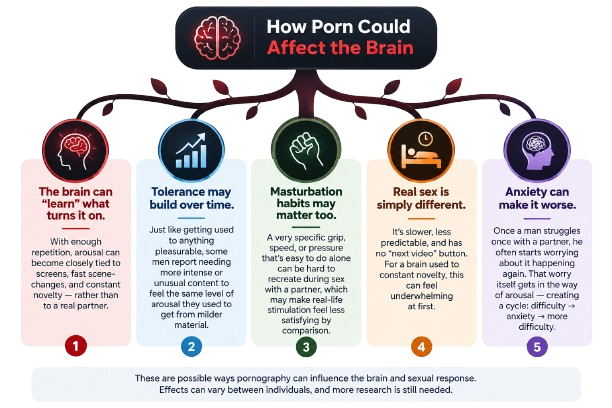
Sexual arousal is closely tied to the brain’s reward system — the same system that responds to anything new or exciting. This is a big reason pornography can feel so gripping: it offers endless novelty, with a new scene just a click away.
Here’s the basic theory researchers and clinicians have proposed:
Can Porn-Related Erection Problems Be Reversed?
For men who suspect this pattern applies to them, several approaches are commonly discussed, both in research and recovery communities:
- Reducing or temporarily eliminating pornography: often the first step people try, sometimes referred to informally as a “reboot”
- Changing masturbation habits: moving toward more moderate pressure/speed that better mirrors partnered sex
- Relearning arousal without highly stimulating content: allowing the brain to recalibrate to less intense stimuli
- Reducing performance pressure: shifting focus away from “achieving an erection” and toward intimacy and connection
- Improving overall health: sleep, exercise, stress management, and reducing alcohol/substance use, all of which affect sexual function broadly
What Happens After You Stop Watching Porn?
There is no scientifically established “90-day reboot” that works for everyone. Recovery, when it occurs, varies depending on factors such as how long the pattern has existed, overall health, and whether anxiety is also involved.
Some men report a temporary drop in libido after reducing pornography, while others notice gradual improvements over weeks or months. Progress may include easier arousal, greater confidence, and less reliance on intense visual stimulation.
If ED persists or causes significant concern, speaking with a doctor or sex therapist can help rule out other causes and provide appropriate treatment.
Leave a Reply