A 5-minute read on why erections fade, and what you can do about it
You’re with someone you’re attracted to, and things are going well. Then you notice your erection fading. Your mind jumps in: What’s wrong with me? Is it happening again? The more you think about it, the less your body seems to cooperate.
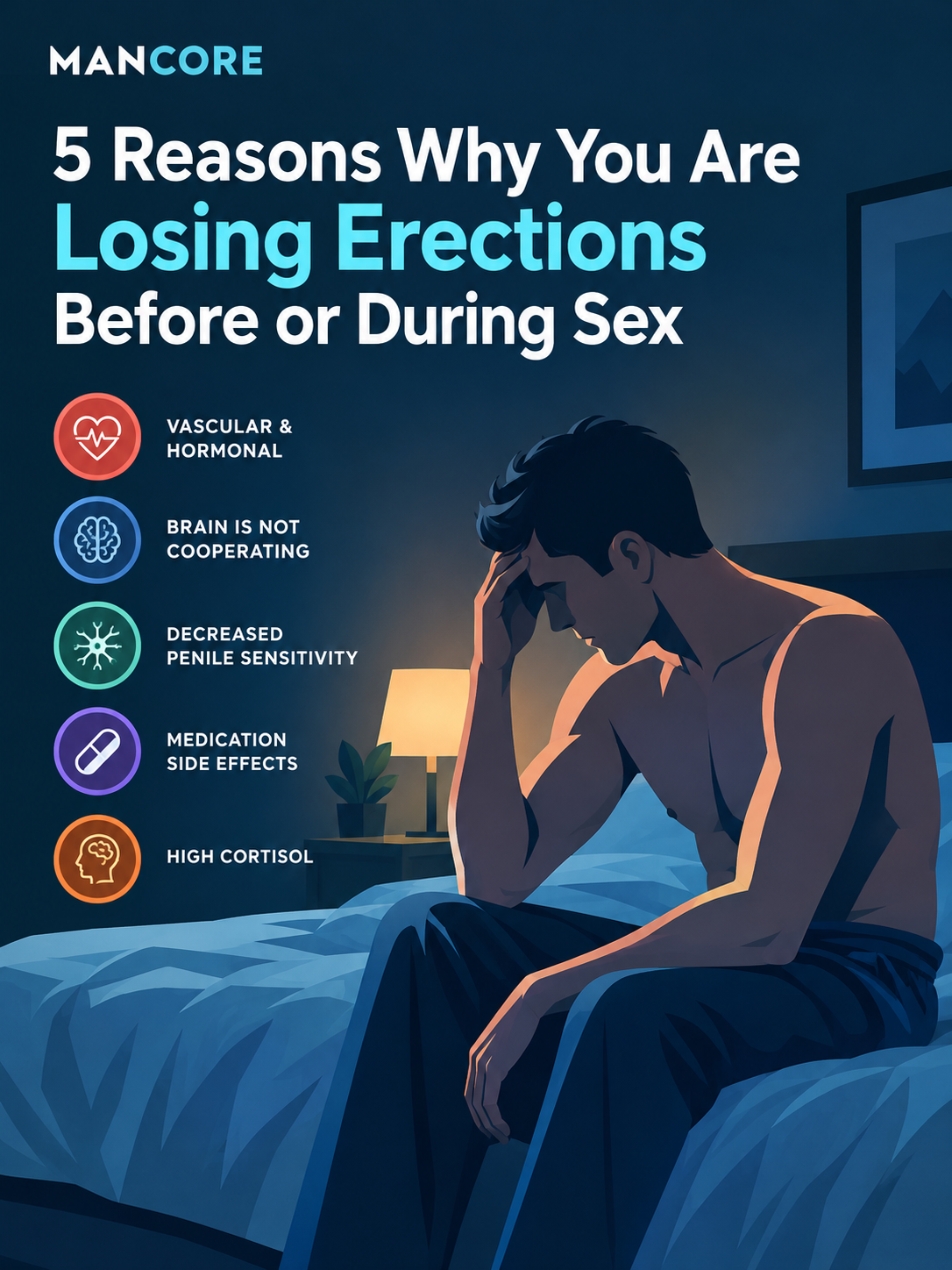
If that sounds familiar, you’re far from alone, and it doesn’t mean something is permanently broken. Erection changes usually have an identifiable cause. Here are five of the most common, plus how to tell when it’s time to get checked.
Start hereOccasional or Something More?
Losing an erection now and then is common. Most men occasionally fail to get or keep one, and stress, tiredness, and alcohol are typical triggers.1
Erectile dysfunction (ED) is different. The European Association of Urology defines it as the persistent inability to attain and maintain an erection sufficient for satisfactory sexual performance.2 One difficult night isn’t ED. A pattern that lasts for months, or keeps worsening, deserves attention.
1Performance Anxiety
Erections depend on relaxation and attention to sensation. Worry does the opposite. After one episode, fear of a repeat sets in, and you start monitoring yourself during sex, a habit therapists call spectatoring.
That self-monitoring pulls your attention away from arousal, while anxiety activates the sympathetic nervous system, the body’s fight-or-flight mode, which works against the relaxed state erections need. The result is a loop: fear, self-monitoring, erection loss, more fear.45 Research on exactly how anxiety affects arousal is mixed, but this distraction pathway is well documented.
2Stress That Never Switches Off
Cortisol is one hormone in the body’s stress response, alongside adrenaline. It isn’t a villain, and it doesn’t cause ED on its own. But prolonged stress rarely travels alone. It tends to come with poor sleep, low mood, heavier drinking, and a mind that’s elsewhere, all of which can lower desire and make erections harder to sustain.1
Depression and anxiety disorders are also linked with erection difficulties, and both are treatable.
3Blood Flow and Heart Health
An erection is a blood-flow event, so healthy arteries and nerves matter. High blood pressure, high cholesterol, diabetes, smoking, and obesity can all damage them.13
That’s why ED is considered a possible early marker of cardiovascular disease. A meta-analysis of prospective studies found a higher average risk of cardiovascular disease in men with ED, though the authors described it as a marker of risk rather than proof of cause.67
4Medications and Their Side Effects
SSRIs, a common type of antidepressant, can delay ejaculation. In some men they also reduce libido, make erections harder, or blunt orgasm. Others notice no sexual side effects at all.8
Some blood pressure medicines, particularly older beta blockers, have also been linked to erection problems. Effects vary by drug and by patient, and the evidence comparing individual beta blockers is limited.910
5Reduced Sensitivity
Some younger men find erections fade when sensation feels dulled. Possible causes include nerve injury or neuropathy (for example from diabetes or trauma), medication effects, alcohol or recreational drugs, and, as a hypothesis, habituation to unusually intense stimulation.38
Ordinary masturbation isn’t known to permanently damage penile nerves. Pornography is debated: reviews find little evidence that porn use alone causes ED, though problematic use, insecurity, and anxiety may play a part.1112
Next stepsWhen to See a Doctor
The NHS advises seeing a GP if erection problems keep happening.1 Book an appointment sooner if you notice:
- Problems lasting more than a few weeks, or getting worse
- Chest pain or breathlessness on exertion
- Numbness, pain, or a new curve in the penis
- Low desire, or symptoms like excessive thirst
- Onset after an injury, surgery, or a new medicine
- Distress that is affecting your mood or relationship
A doctor will usually ask about your health, lifestyle, and relationships, and check basics like blood pressure. Treatment depends on the cause, and for many men the problem improves.1
This article is for general education and does not replace professional medical advice, diagnosis, or treatment.
References
- NHS. Erection problems (erectile dysfunction).
- Salonia A, et al. European Association of Urology Guidelines on Sexual and Reproductive Health, 2021 update. Eur Urol. 2021;80(3):333-357. doi:10.1016/j.eururo.2021.06.007
- NIDDK. Erectile Dysfunction.
- A review of experimental research on anxiety and sexual arousal: implications for CBT for sexual dysfunction. 2019. SAGE Journals
- Beck JG, Barlow DH. The effects of anxiety and attentional focus on sexual responding II: cognitive and affective patterns in erectile dysfunction. Behav Res Ther. 1986;24(1):19-26. doi:10.1016/0005-7967(86)90145-2
- American College of Cardiology. Erectile Dysfunction and Risk of CV Disease: A Meta-Analysis (summary of Dong et al., J Am Coll Cardiol, 2011).
- Gandaglia G, et al. A systematic review of the association between erectile dysfunction and cardiovascular disease. Eur Urol. 2014;65(5):968-978. doi:10.1016/j.eururo.2013.08.023
- Jing E, Straw-Wilson K. Sexual dysfunction in selective serotonin reuptake inhibitors (SSRIs) and potential solutions: a narrative literature review. PMC6007725
- Sharp RP, Gales BJ. Nebivolol versus other beta blockers in patients with hypertension and erectile dysfunction. Ther Adv Urol. 2017;9(2):59-63. PMC5298412
- Lu Y, et al. Effect of nebivolol on erectile function: a systematic review and meta-analysis of randomized controlled trials. J Sex Med. 2025;22(2):307-316. Oxford Academic
- Landripet I, Štulhofer A. Is pornography use associated with sexual difficulties and dysfunctions among younger heterosexual men? J Sex Med. 2015;12(5):1136-1139. PubMed
- Dwulit AD, Rzymski P. The potential associations of pornography use with sexual dysfunctions: an integrative literature review of observational studies. J Clin Med. 2019;8(7):914. PubMed
- NI Direct. Erectile dysfunction (impotence).
Leave a Reply